
DESIGN & TREND
Material Trial 2: Washi Opens a New Cycle in Sustainable Design − Upcycling Footwear Scraps with TOPPAN and New Balance
2025/12/09
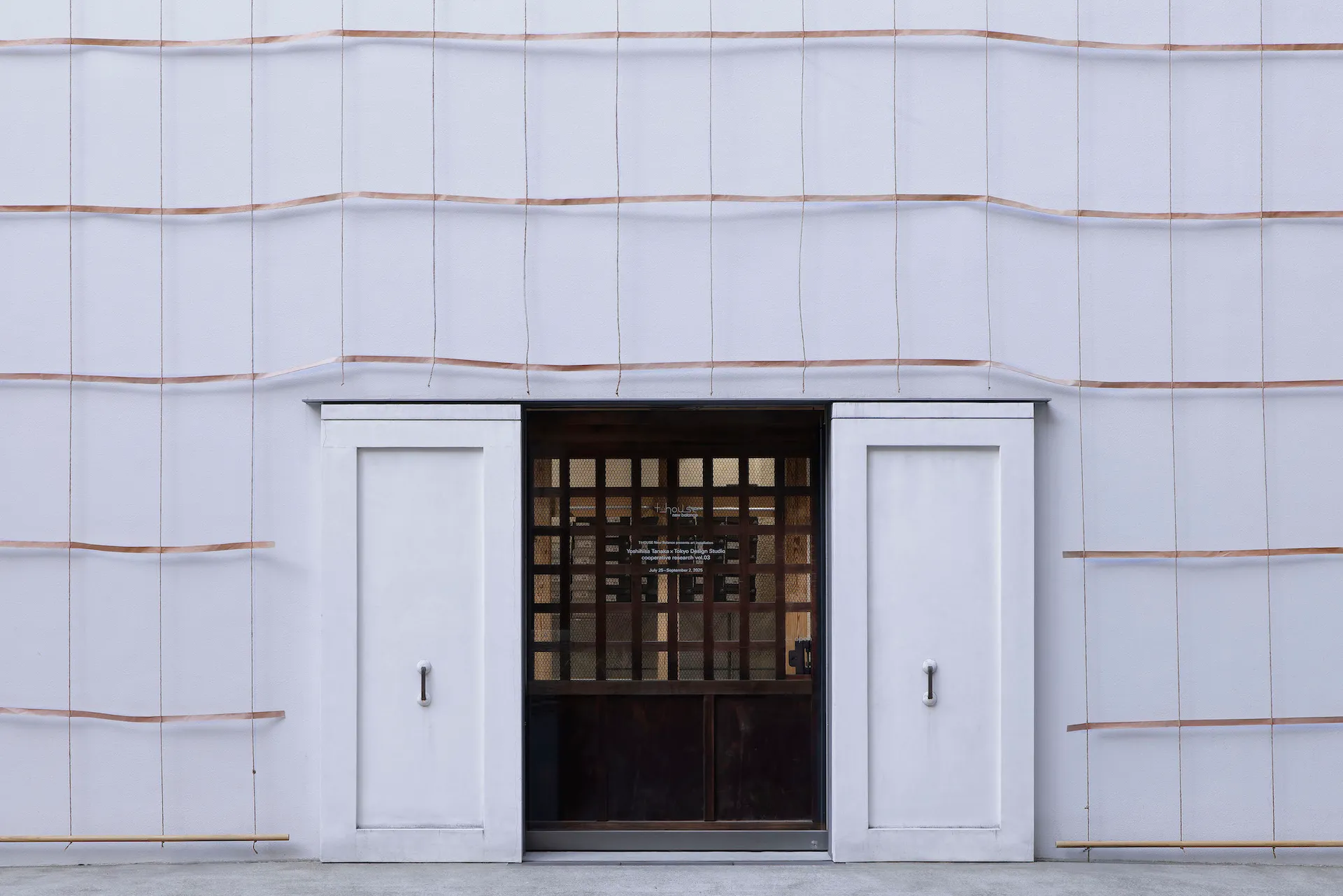
Washi (Japanese Paper), a material traditionally cherished in Japan, is gaining renewed attention across various fields, including fashion and interior design, for its unique texture and properties.
TOPPAN runs the "Material Trial," an experimental project dedicated to exploring new possibilities for building materials through collaboration with designers from diverse genres. In the latest trial, TOPPAN partnered with graphic designer Yoshihisa Tanaka to create a novel washi-based material, which was subsequently adopted for a major project with New Balance. Centered on the theme of "Upcycling," this project saw the washi material integrated into footwear components and architectural spatial designs. The resulting experiments and exhibitions aimed to significantly update the conventional image of Japanese paper.
We interviewed Mr. Tanaka about the background of the New Balance project, the creative process, and his future vision, starting with the initial Material Trial initiatives.
Rethinking Washi: From Craft to Cutting-Edge Sustainable Material
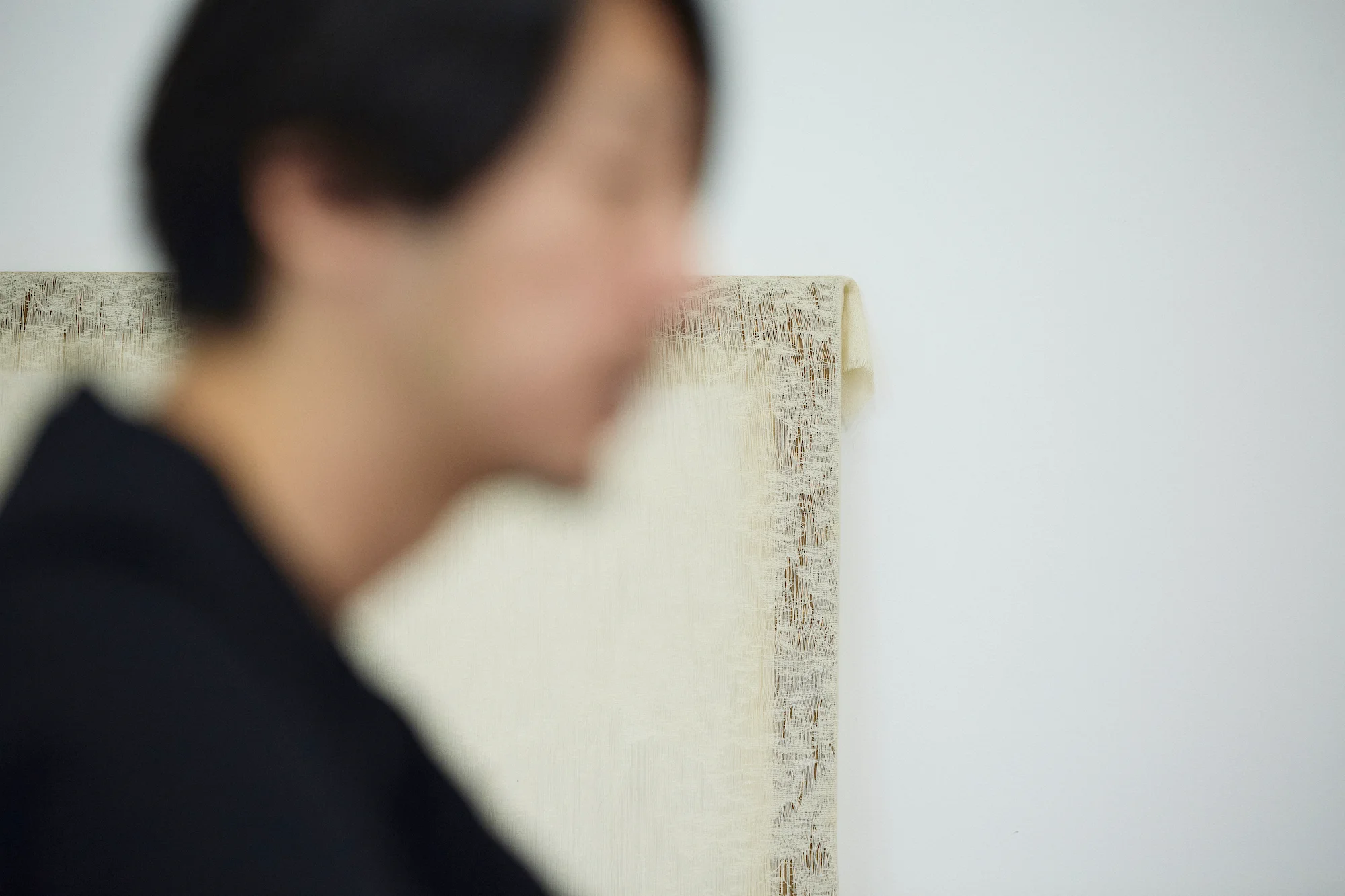
Mr. Tanaka’s initial interest in paper, driven by his work in print media, evolved into exploring "the intrinsic nature of paper itself," particularly as digital media became dominant. His extensive research revealed that despite washi's strong craft image, it possessed unique, often overlooked, functionality and material strength. He concluded that a modern approach to washi could secure paper's significance in a new, sustainable era.
Upcycling Footwear Scraps: A Partnership with New Balance
Since 2020, Mr. Tanaka has collaborated with the TOKYO DESIGN STUDIO New Balance to explore innovative and sustainable footwear production. This partnership led to a focus on combining washi with shoe end-materials (scraps). Due to the high strength requirements of footwear, the material development required two extensive R&D phases—research and experimentation—to structurally integrate the paper.
Trial 1 & 2: Material Development and Use Cycle Innovation
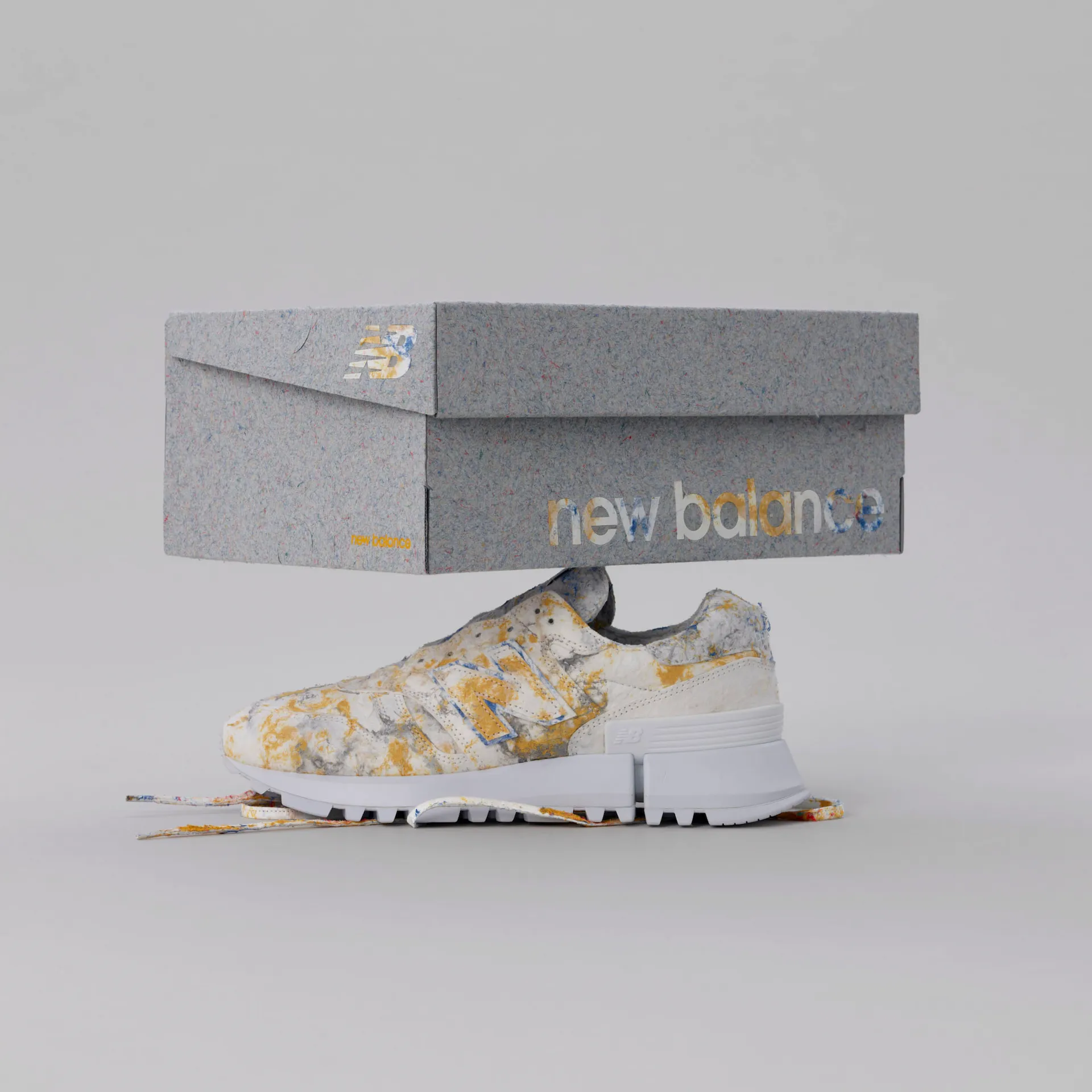
The first trial successfully turned various shoe scraps, such as suede and leather, back into fibers. These fibers were then combined with washi to create new sheets used for shoe patterns, as well as essential components like shoeboxes and shoelaces. The shoebox was engineered with a durable three-layer structure, featuring a washi surface layer, designed for real-world use.
The second trial shifted focus to the user consumption cycle. To encourage longevity and repair, an in-store cleaning service box was introduced, where customers' cleaned New Balance shoes were returned in the custom-made washi shoeboxes. This effort was a conscious move to update user behavior alongside the product itself.
The Third Trial: Designing Footwear for Paper
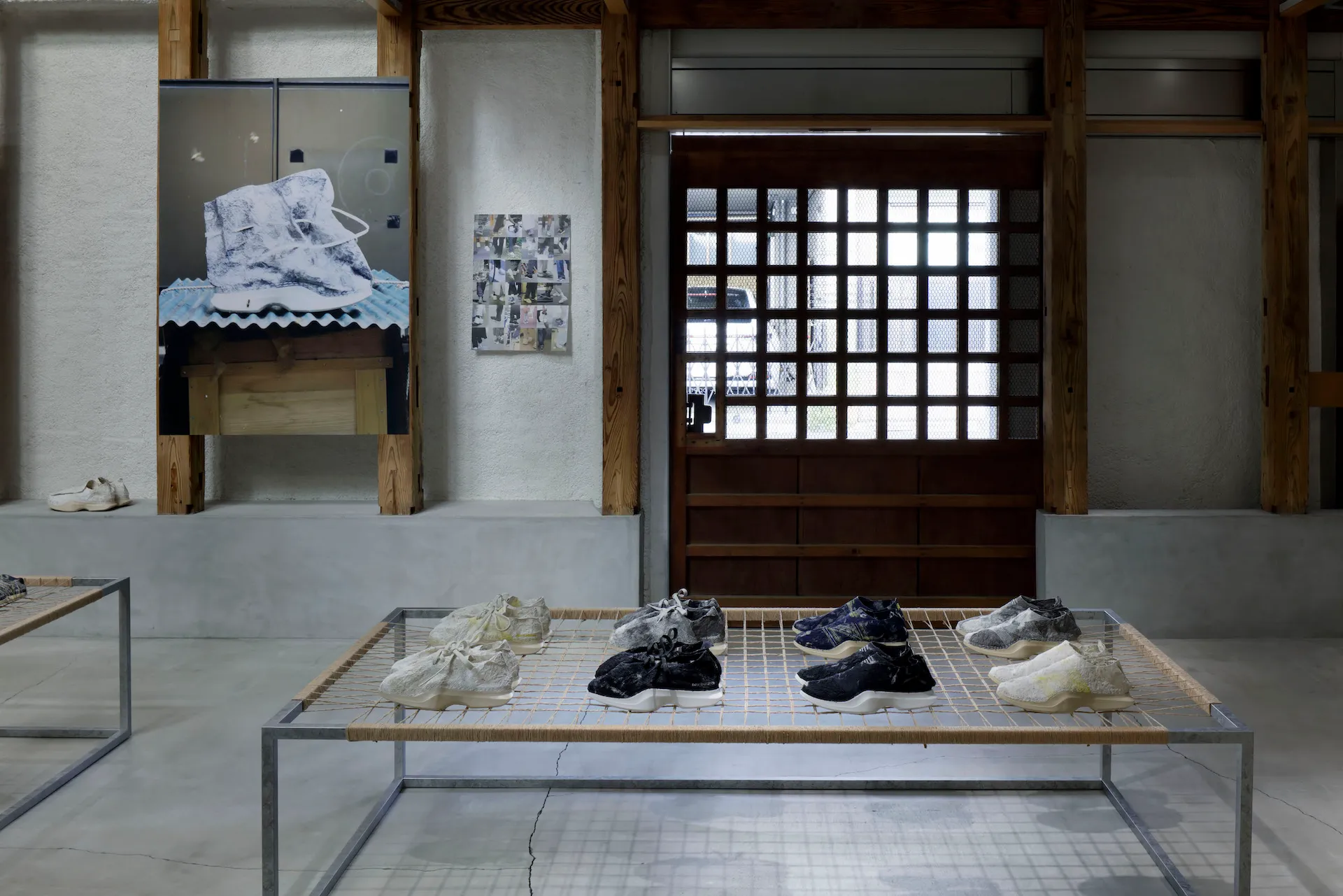
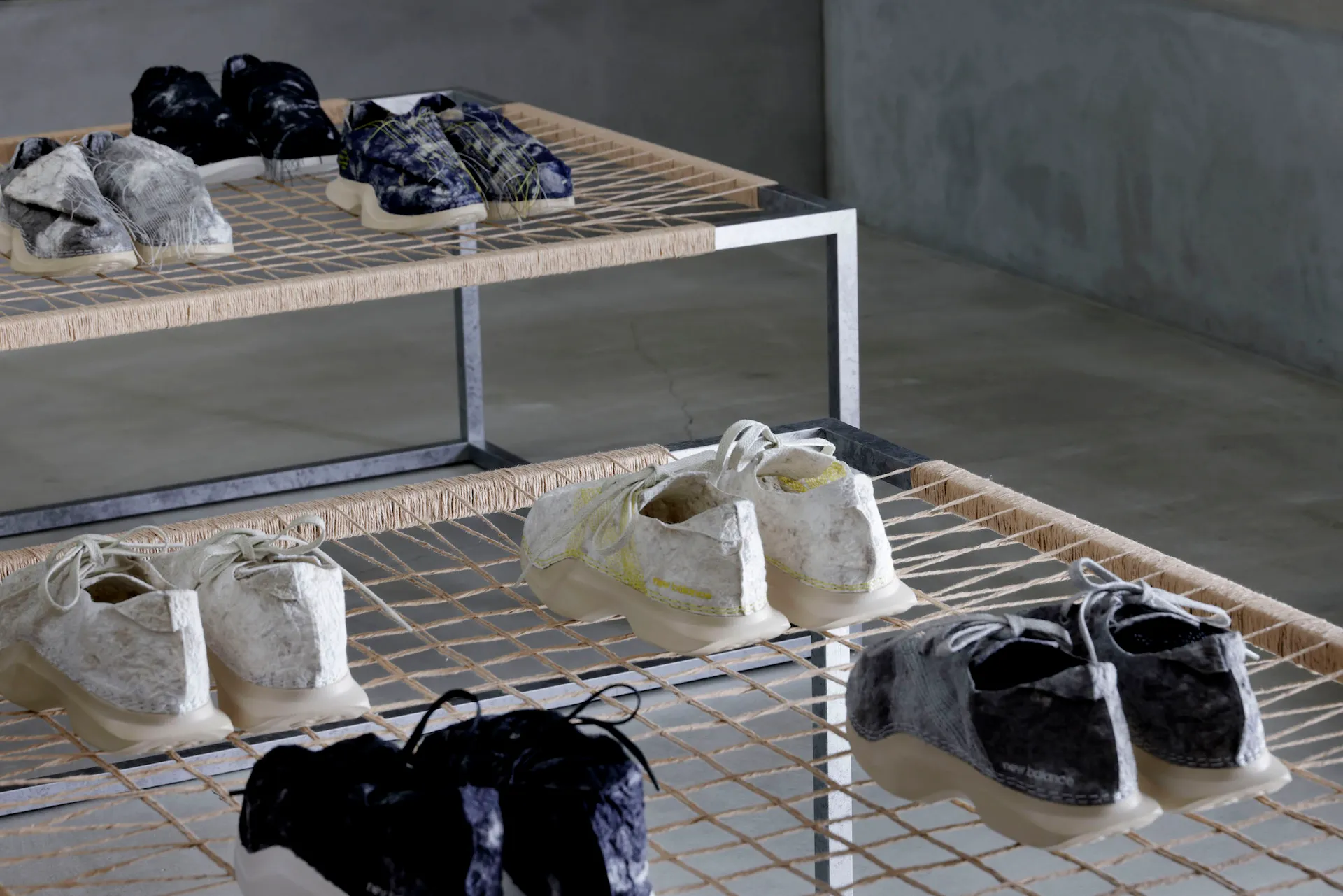
In the third and most recent exhibition, an entirely new pair of shoes was completed. Unlike typical footwear constructed from dozens of fabric patterns, this design utilized a single washi-based pattern to maximize the paper's properties. Structural features, such as heel strength, were achieved by folding the material—a technique uniquely enabled by paper. This approach demonstrated that the material's meaning could be intrinsically linked to the design and structure.
Washi in Architecture: The TOPPAN Collaboration
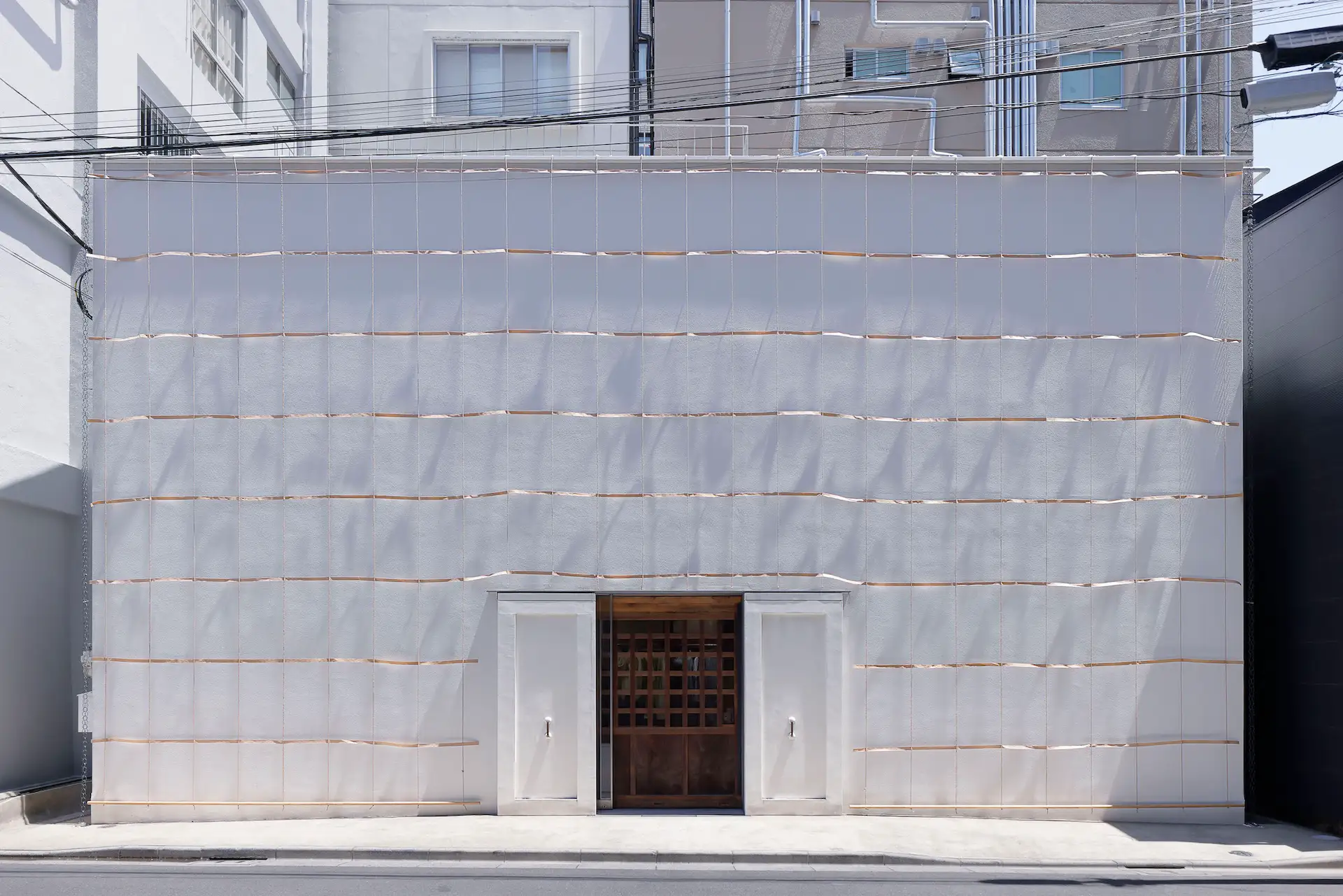
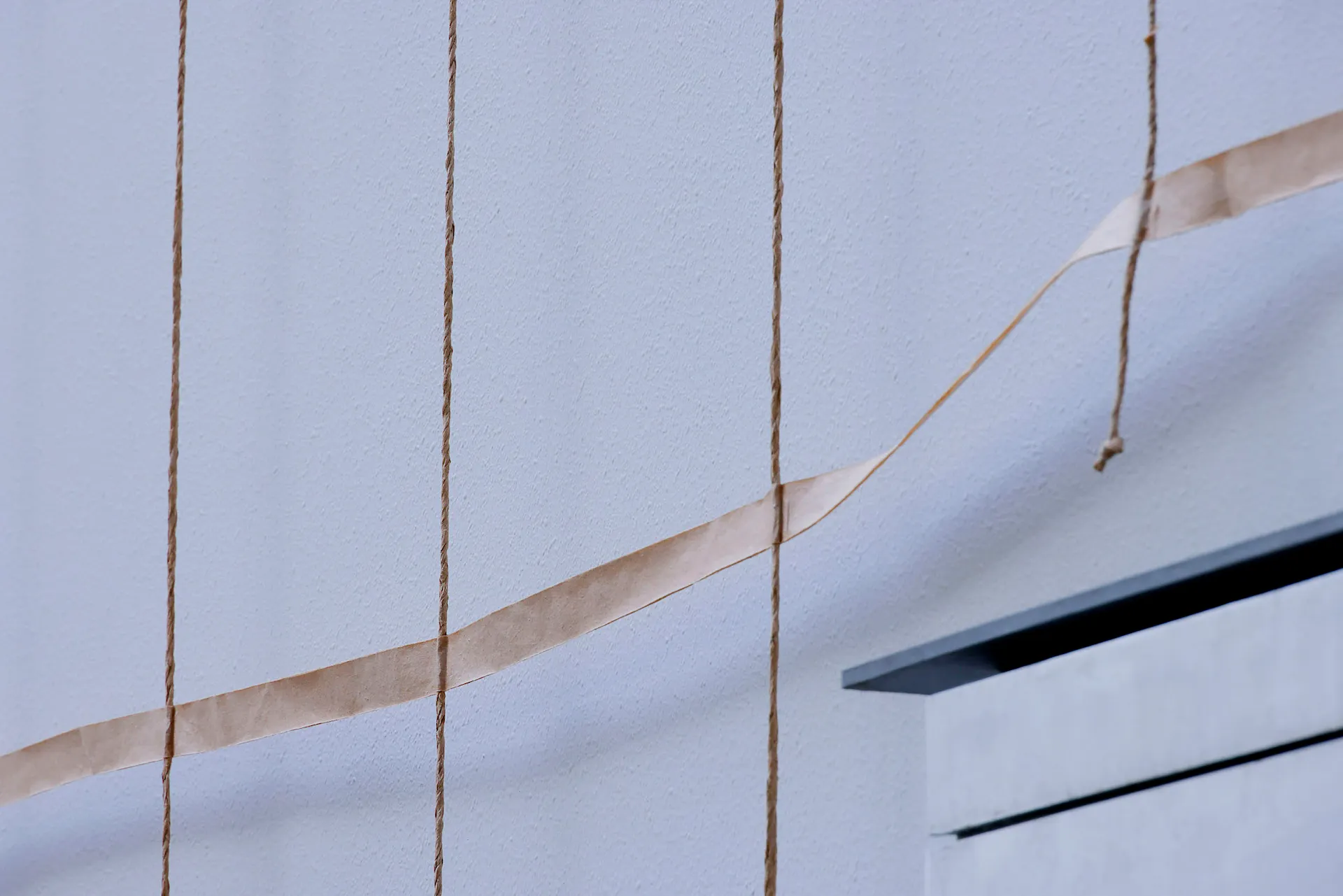
The partnership with TOPPAN specifically centered on washi's potential as a building material. The collaborative efforts focused on creating a temporary façade and in-store display fixtures.
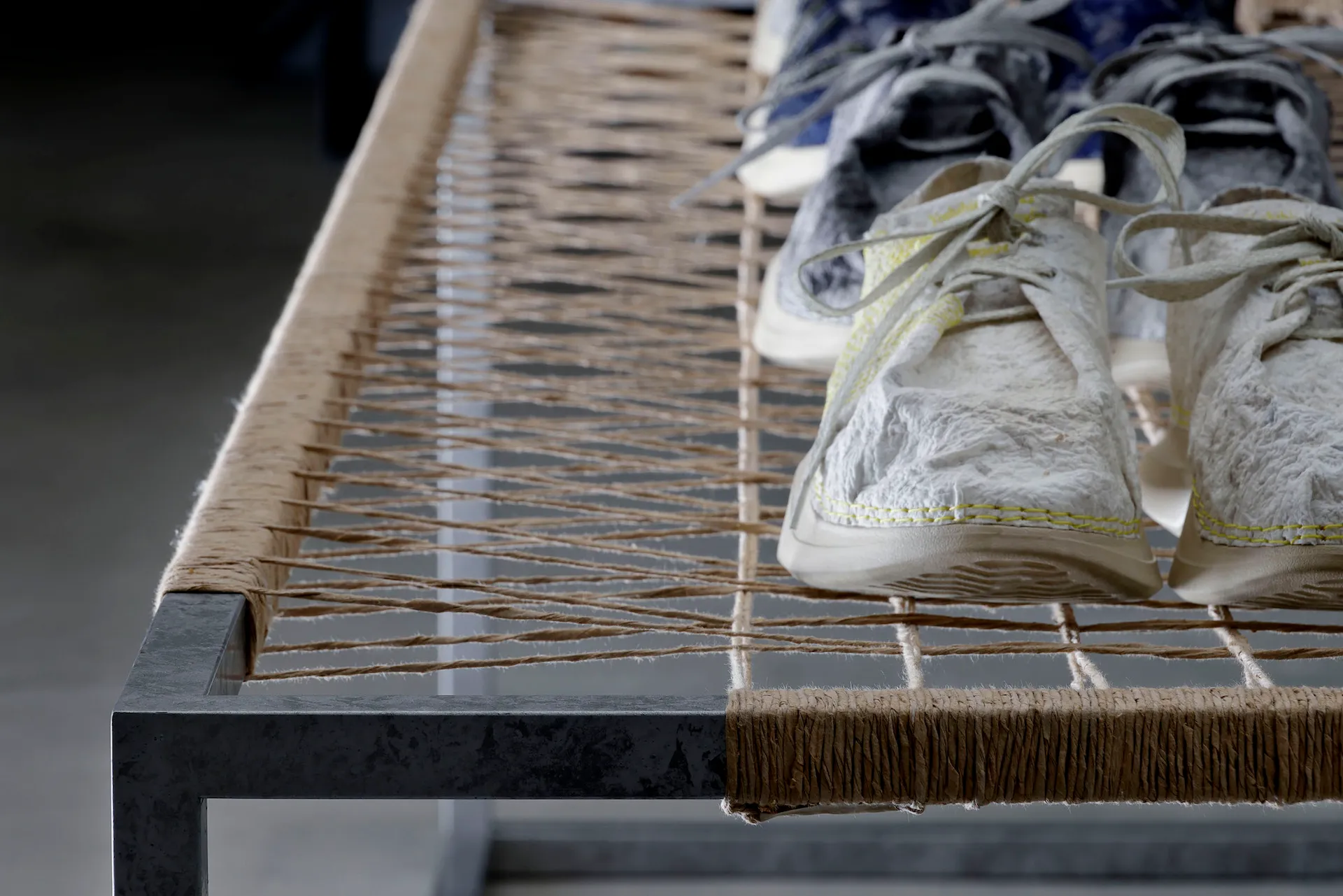
This process involved rigorous material selection, experimenting with additives like soil, and developing coating techniques to ensure water repellency for outdoor specifications. For the in-store seating, paper cord, a common chair-making material, was adopted. The team sought a delicate balance: increasing functionality and strength without sacrificing paper's unique characteristics—its lightness, visual texture, and soft tactile feel. The final paper façade successfully withstood four typhoons during its month-long outdoor exhibition, drastically challenging conventional perceptions of the material.
The Future Outlook: Portable Architecture and the Power of Design
Mr. Tanaka emphasizes that the future of material innovation depends on bridging the gap between development and practical implementation. This is where design plays a critical role: not just in function, but in appealing to human sensibility and enriching the material's capabilities.
For the future, the goal is to expand the material’s applications, potentially creating lightweight, portable temporary architecture—such as a tent membrane—that can be easily transported and deployed. He hopes to continue outdoor testing for periods of several weeks to months. The ultimate aim of the "Material Trial" is to inspire new ideas by uncovering the hidden power of everyday materials, providing a foundation for future sustainable manufacturing and living.
Interviewer: Yoshiko Kurata / Photographer: Shota Kobayashi
RECOMMENDATION
3daysofdesign 2026 Report | Design Beyond “Newness”: Towards Layering Value
Milan Salone 2026 CMF | Quiet Depth Orchestrated by Materials
Milan Salone 2026 Flash Report | "Luxury of Silence" Sought in a Confusing World
2026 Interior Design Trends: The Radical Power of "Normal" − Why Primary Oak is Your New Secret Weapon
2026 Interior Design Trends: The Evolution of "Refined Tactility" and the New Standard, Yoguri
2026-2027 Lifestyle & Interior Design Forecast: Navigating Diverse Values and the Future of Living
Salone Eucalyptus: Bold Elegance with a Contemporary Edge
Vento Walnut − Elevating Interiors with Sophisticated Flow
Milan Salone 2025: A Return to the Core of Design − Fumie Shibata, Piero Lissoni, and Nicholas Baker on the Future of Living
The Five Pillars of Exploration: A Deep Dive into Interprint's IP25

Redefining Decor Design: Interprint's IP25 Reveals a New Vision
Touch, feel, and let inspiration arise. Co−creation space TOPPAN "surface park™" opened!
The Very Best Dark Grey Colours For Wood: Interior trend 2025 Foschia Elm − A Whisper of Texture, A Touch of Craft
The Very Best White Colours For Wood: Interior trend 2025−2026 Mercury White: A Bright Woodgrain for Light−Filled Spaces
Redefining the Future of Surfaces: Our Vision at Interzum 2025
Designing "building décor materials" which make up our living spaces − Reproducibility and originality −
The Very Best White Colours For Wood: Interior trend 2025-2026 Margaret Elm − A Timeless Elm Design Bridging Classic and Contemporary
The Very Best White Colours For Wood: Interior trend 2025-2026 Skrilla Ash: Bold Calmness, Refined by Design
Interior Trends from 2025 to 2026 based on the Latest Lifestyle Trends
TOPPAN at interzum 2025
Milano Design Week 2025 News − Latest Trends and Key Points
Unravelling the Trends of the Global Market! 2025−2026 Grand Design Concept: In Sync, In Step
[Newsflash from Milano Salone 2024] Report on Design Trends
Heimtextil 2024 Report
DOMOTEX 2024 Trend Report
Milano Design Week Trend report Vol.1 1986−2023
2025 Interior Trend Forecast based on Lifestyle Trends
What Does It Mean to Be “Chosen” in the Age of Swipe Consumption?
CERSAIE 2024 Trend Report
Cersaie 2023 Report

